
the piano shed
  • Teaching Blog
  • Sheet Music
  • Private Lessons
  • Video Tutorials
  • About
  • Contact

Jazz, Pop, & Blues Piano Lessons - Available Online and In-Person in the Greater Boston Area

Left Hand Technique -- "St. Thomas" by Sonny Rollins

12/4/2013

2 Comments

 
Picture
When I was a young student of jazz (ahh...the olden days!) I was on what seemed like a never-ending quest for a way to play solo jazz piano that didn't make everything sound like a ballad you'd hear in a cocktail lounge.  The ragtime and stride pianists back in the day could make people dance with just a piano, why couldn't I?  

While I'm still working hard on my solo piano skills (never stop learning!), I've discovered a few techniques along the way that I've found helpful.   The one revelation I'm going to share with you all today is...drum roll...HALF NOTES in the left hand!

Half notes?!? you might ask?  That's right.  Plain old half notes in your left hand can do a lot more than you think.   Half notes in the left hand are imitating what a bass player does.  If you want your solo piano playing to sound more like a band, you have to stop thinking like a piano player and think like an arranger instead.   Each hand (or better yet each FINGER) is its own instrument.  In this example, your left hand is the bass player.  And the bass is where the groove comes from.    

So the left hand (bass player) is going to start by playing half notes.  The reason we start with half notes comes from what actual bass players play.  In a medium swing tune, before a bass player starts walking on all four beats (i.e. quarter notes), he/she plays what's called a two-feel, aka two notes per measure, aka half notes.   A traditional bossa nova player plays plain old half notes to lay the foundation of the groove.  So that's where we will start with our left hand!  

Try it over a few different tunes -- some with a swing feel and others with a straight 1/8th feel (i.e. a bossa). Play just the melody on top of it.  You'll be suprised at how much the half notes in the left hand add groove!
Here are a few rhythmic embellishments to try after you've mastered the plain half notes.  

1.  Add 1/8 note pickups to each half note.
2.  Add a quarter note on beat 4 so each measure is half, quarter, quarter (or do this every other measure).
3.  At the beginning of a four measure phrase, anticipate the first note on beat 4 of the previous measure.  
4.  Write out a bass line that uses all three of the above techniques.  

If you practice this a lot, soon enough you'll be creating your own rhythmic embellishments, all with an underlying half note groove.  

In the following two-part video tutorial, I teach you an arrangement of Sonny Rollins' "St. Thomas" that uses this technique.  I hope you enjoy the videos, I've been working hard in the lab on upping the ante with the audio and video and quality. Please tell me what you think, I'm always looking for ideas on how to get better. While you are at it, let me know if you have any song requests for future videos!

Happy Shedding! 

2 Comments

Mercy, Mercy, Mercy - Solo Piano Tutorial of a jazz classic

10/30/2013

5 Comments

 
Picture
Joe Zawinul, the great keyboardist and composer from Austria, wrote his most famous composition, “Mercy, Mercy, Mercy” during his time playing with the Cannonball Adderley Quintet.   I’ve played and taught this incredibly versatile song in all sorts of contexts – I’ve performed it on gigs with trios and quartets and love to teach it to students whether it be to small combos or solo pianists.  The catchy melody, gospel chord changes, and soulful feel make this tune irresistible. 

In the following in-depth video tutorial, I show you how to play an intermediate level solo piano arrangement of this jazz classic.  Download and print the sheet music below.  

Happy shedding!

Video Tutorial - Part 1

Video Tutorial - Part 2

If you'd like to purchase the sheet music for my arrangement of "Mercy, Mercy, Mercy" for $1, click the Buy Now button.    
5 Comments

Stevie Wonder's "As" - Chord voicings and analysis

10/4/2013

7 Comments

 
Picture
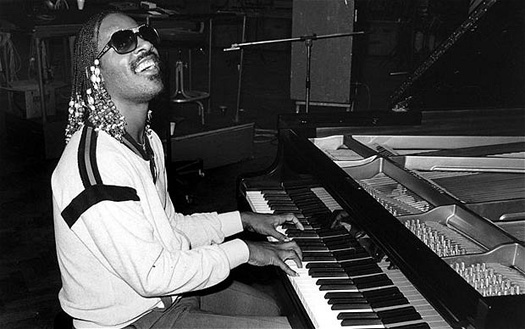
Stevie Wonder is without question one of my favorite artists of all-time.  From his killer piano/keyboard playing, to his soulful singing, to his unrivaled songwriting, he is a serious triple-threat.  I love learning to play Stevie songs as much as I love listening to them.  Although you'll probably never hear me doing this in public, I also love to play the chords to his songs and sing along.  In fact, teaching my students how to play piano while they sing along is one of my favorite things to do because I know how much joy that can bring. 

I am working with an online student where we almost exclusively learn how to play the chords of songs so she can sing along with them.  She recently asked to learn Stevie Wonder's song "As."  Needless to say, it didn't take much convincing for us to work on this one.  

Check out the video below of me playing the voicings.  I start by playing the voicings with some rhythmic embellishment then simplify things by playing as written on the sheet music (below).  Tell me what you think of this new split screen MIDI technology I'm experimenting with, so you can get a better idea of what notes I am playing.

As by Stevie Wonder -- Chord and Piano voicings by The Piano Shed - Jazz, Pop, and Blues Music Lessons

When learning "As," here's two things to think about:  

Chord voicings

Once again, as I talked about my previous blog entry about "Let's Groove," many of these chord voicings are Root in the left hand and 7-3-5 in the right hand.  It's a classic voicing that you'll see again and again.  Also take note on how on some dominant 7 chords (i.e. C#7, F#7) I use a 3-7-9 voicing.  That's another good one to have under your fingers.

Chord function

Ok, time to put your theory hats on.  With any song you learn, whether it be R&B, jazz, pop, rock, whatever -- I can't stress how important it is to know the FUNCTION (roman numerals) of each chord.  Take the key of C major.  You have C major (the I chord), D minor (the ii chord), E minor (the iii chord), F (the IV chord) and so on. Think of every chord in terms of its function.  This will help you in so many ways -- with memorization, with transposing, with learning the way certain chord progressions sound by ear.  I started doing this way later in the game than I wish I had and I won't let you make the same mistake.  Trust me on this one!  

So let's talk chord function for Stevie Wonder's "As."  This one isn't so straight-forward, that's why I thought it might be a good one to talk down.  Don't worry so much if this is too complex, see what you can understand. Hit me up with private questions or we can talk about this sort of thing in a one-on-one lesson.  

First step -- what key are we in?  Well, we are sort of shifting between B major and then the relative minor (a 6th up), G# minor.  I've attached below my harmonic analysis of it.  Remember capital roman numerals are major chords and lower-case roman numerals are minor chords.  A triangle means "major."  

Verse
The first measure starts off with the Imaj7 chord which changes to a I7 chord.  That I7 acts as a dominant that leads to the IVmaj7 chord.  Then the 3rd measure has the same Imaj7 to I7 but instead Stevie goes to a bVIImaj7 chord.  Pretty tricky move there.  It's a FLAT VIImaj7 because an A natural is out of the key of B major, something us theory nerds call "modal interchange."  Measures 5 and 6 are the same as 1 and 2.  

Now we get to a vi7 chord in measure 7.  That can act as the plain old vi7 chord or also a i7 chord in a new key, G#minor.  This makes the G#m7 chord something we call a "pivot chord," a chord that works in two different keys that helps you switch from one key to another.  I think of the next two chords as in G#minor -- the iidim7 and the V7b9.  (Normally the ii chord in minor keys is half-diminished, but just to make things a bit more complex, Stevie uses a ii fully dim 7).  Now thinking of measure 8 in B major again, we have a pretty classic turn-around, vi7, II7, ii7, V7.  

Chorus
The chorus is only 4 chords and I consider that to be exclusively in G#minor.  It goes i7, iidim7, i6/5 (an inversion of i7 with the 3rd in the bass), and finally a IV7.  Note that the iv chord in minor is usually a minor chord, but here Stevie uses a dom7 chord.  This is very common in R&B/funk etc.  

Bridge
The chord that leads into the bridge is a cool one, F7#5.  I labeled that one as a something from B major, a bII7(#5)/IV.  What??! you might ask.  The "/IV" can be read as "of four" meaning that the function of this chord is to lead to the IV chord in B major, which is Emaj7.  Now think, what's the flat 2 of E major scale?  The 2nd degree of the E major scale is F#, so the flat 2 is F.  The "flat 2" 7(#5) is an F 7(#5).  

That bII7(#5)/IV leads us to the first chord of the bridge, Emaj7, or the IV of B major.  Then the bridge is pretty straightforward after that:  Imaj7, IVmaj7, bIIImaj7 (another "modal interchange"), IVmaj7, Imaj7, ii7, and another common turn-around iii7, VI7, ii7, V7.

Phew.  There ya have it.  Is your brain still functioning after all that?  Ok, now forget all that theory stuff and have fun playing and singing the tune.

Happy shedding!

As by Stevie Wonder - Harmonic Analysis from the Piano Shed

7 Comments
<<Previous
Forward>>

    Recent Posts


    Categories

    All
    Advanced
    Arrangements
    Beginner
    Comping
    Composition
    Harmony
    Imrpovisation
    Inspiration
    Intermediate
    Jazz
    Pop
    R&b
    Rhythm
    Technique
    Transcription
    Two Cents Tuesdays
    Video Tutorials
    Video Tutorials
    Voicings


    Archives

    October 2023
    April 2021
    March 2021
    December 2020
    October 2020
    August 2020
    April 2017
    March 2017
    May 2015
    August 2014
    June 2014
    May 2014
    April 2014
    March 2014
    February 2014
    January 2014
    December 2013
    October 2013
    September 2013
    August 2013
    July 2013
    June 2013
    May 2013
    April 2013
    March 2013
    February 2013


    RSS Feed


The Piano Shed provides fun and creative music instruction specializing in jazz, pop, & blues piano. We serve online students all over the world and local students in the Boston, MA area. Visit our blog for free piano lessons, sheet music and video tutorials! 
Like The Shed on Facebook!  
Subscribe for free lessons on YouTube!
Proudly powered by Weebly